
Hamnet, Sentimental Things, and Train Dreams: 3 slow movies. One of them is a masterpiece.

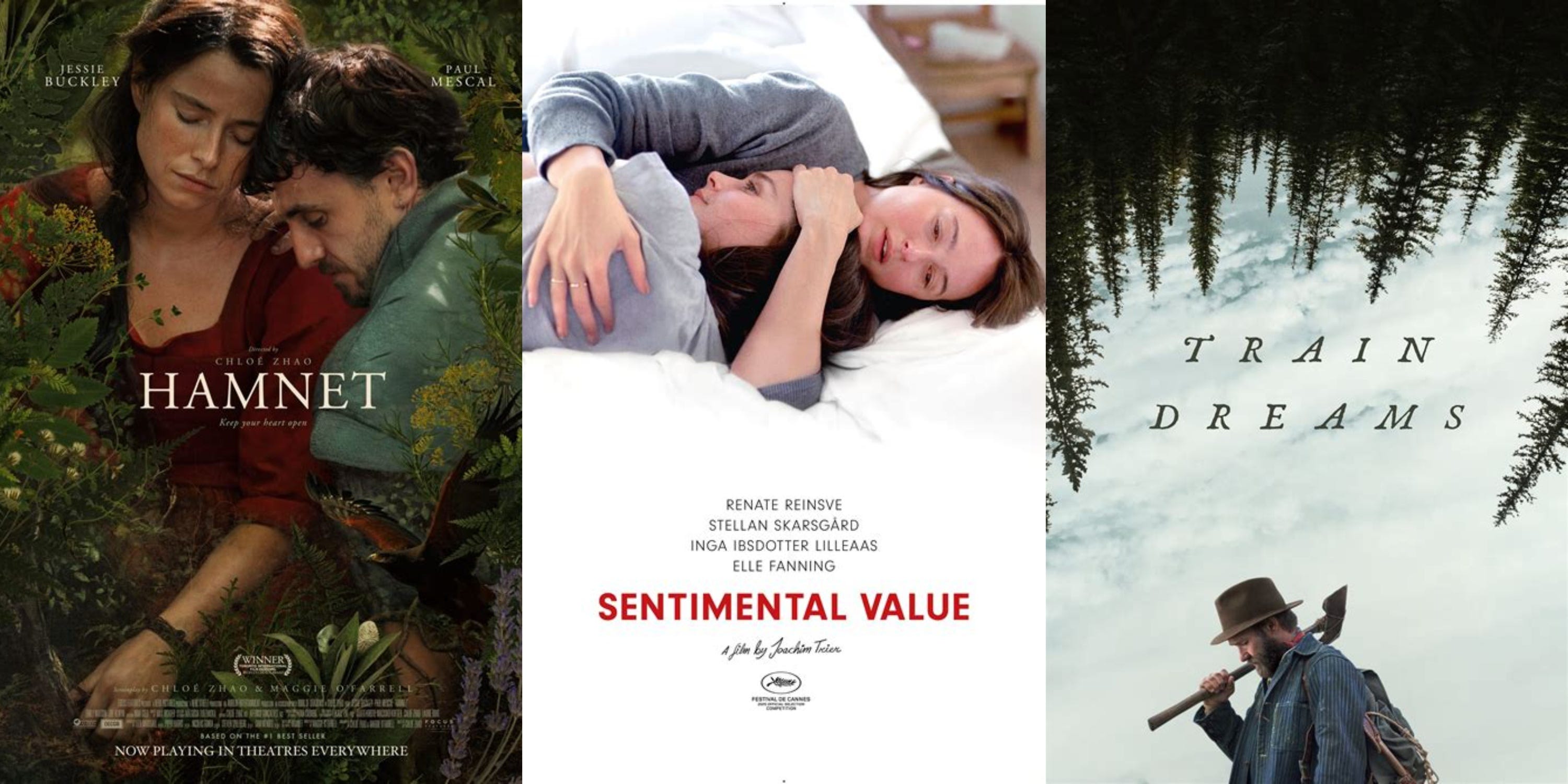
(WARNING: Some of you may disagree with me about the two films I’m about to poop on and the one I’m going to toast. That’s okay. Value is subjective. All opinions here are mine and mine alone)
When slow films are done well, I really really like them. But it’s difficult to do them well. Many try. Most fail.
Hamnet, Sentimental Things, and Train Dreams are all nominated for Best Picture of 2025, and each one unfolds like molasses in winter, but only one rises above the slog to earn its runtime.
Spoiler: It’s Train Dreams. The other are gorgeous to look at and impeccably performed, but they drown in their own pretensions, courtesy of directors and editors who seem to care far more about themselves than the audience.
Let’s start with Hamnet, Chloe Zhao’s adaptation of Maggie O’Farrell’s novel about Shakespeare’s family grief. On paper, it sounds profound: a meditation on loss, creativity, the Elizabethan era’s harsh realities, and potentially a window into the inspiration that drove “The Bard”.
Admittedly, the film is pretty. It’s shot like a Renaissance painting come to life — every frame drips with atmospheric lighting and period detail that screams “award bait.”
The acting is also quite good. Jessie Buckley as Agnes (William Shakespeare’s wife) is a force, wringing emotion from every glance and whisper. But you can go way too far with stuff like that, and boy do they.
Scenes linger endlessly on actors emoting, both in silence and in elongated wails, as if the camera is begging us to applaud the “artistry.” The editing is just a crime — long, unbroken takes that go nowhere, turning what could be a tight 90-minute drama into a two-hour endurance test.
And worse, there are scenes of Agnes in the forest, playing at being a witch, and “communing” in some bizarre way with a giant mossy tree with exposed roots leading to some mysterious and seemingly important underground cavern.
None of these scenes have much to do with character development or plot, but they dominate the screentime in the first half of Hamnet. Oh, plus falconry, for some bizarre reason. Read the plot from Wikipedia. You’ll get a sense of what I mean.
The film is self-indulgent to the core, reveling in its own beauty without earning our investment in time or attention. By the halfway mark, I was checking my watch, wondering if this is a film or just an excuse for thespians to pat each other on the back.
Sentimental Things fares no better. This one’s a meta-mess from director Joachim Trier. It’s kinda about a house. It’s kinda about a father’s strained relationship with his two semi-estranged daughters. It’s kinda about an hour too long, and it’s definitely about the oh-so-emotional-and-important craft of acting, movie-making, and “the theater”.
I must admit, the acting is particularly good in this film, featuring Renate Reinsve, Inga Ibsdotter Lilleaas, Elle Fanning, and a particular favorite of mine over the years, Stellan Skarsgård.
But acting is no good with a self-indulgent script and an editor afraid to use his scissors in a responsible manner.
Visually, Sentimental Value is stunning: Kasper Tuxen’s 35mm cinematography captures Oslo’s quiet intimacy and the weight of memory with exquisite restraint, and the performances are layered and raw — Reinsve’s guarded intensity, Skarsgård’s vulnerable charisma, Fanning’s bright and intense outsider energy.
All the performances really shine. And yet… (yawn).
The direction leans too heavily into mood over motion, letting conversations and silences stretch far beyond what’s needed, as if every pause is profound rather than padded.
The editing was excruciating as well, allowing scenes to meander through repetitive emotional beats and montages so introspective that they evoke the rumination of cattle — endlessly regurgitating and rechewing the same regrets without advancing the narrative.
The film becomes boring despite its maturity — self-indulgent in its insistence on unpacking every microaggression and unspoken hurt, turning what could be a piercing family study into a drawn-out therapy session on screen — and about the screen.
And let’s be real about the industry’s favorite genre — and the real reason I suspect these two films (and those like it over the years) get nominated. They are movies about the travails of filmmaking, the tortured artist-parent dynamic, and the awesomeness and importance of… themselves.
Hollywood (and now international auteurs) can’t resist these tales where “the artist turns the camera on themselves! (gasp)”, then shower themselves with nominations. It’s the ultimate lazy loop — self-congratulatory circles where the industry awards itself for mirroring its own neuroses.
That doesn’t sound like merit, to me. That’s sounds like a mutual admiration society in overdrive.
On the other hand, Train Dreams — Denis Johnson’s novella brought to life by director Clint Bentley — that’s the gem in this trio. It’s slow, no doubt, following a solitary forester and rail worker’s life in the early 20th-century American West, with vast landscapes and quiet introspection.
But unlike the others, it’s beautifully shot and acted without ever feeling indulgent. Joel Edgerton anchors it with a restrained, haunting performance, supported by a cast that embodies the era’s rugged isolation — with a particularly impressive performance (to me) by William H. Macy.
What elevates it to masterpiece status, especially considering my critiques of the first two films? It’s the editing. Sharp, purposeful cuts and flashbacks keep the narrative humming along and fascinating, even in the quietest moments.
No scene overstays its welcome. Every frame pushes the story forward, building a cumulative power that hits like a freight train by the end and had me smiling ear to ear as I walked out of the theater, contemplating my own life and its meaning.
And are the other two films beautiful? Yeah. They are, but Train Dreams is even better. You can almost smell the forest as you watch.
Because this film is about a man’s life, and not showbiz, Train Dreams isn’t just reveling in its own aesthetics or showcasing “acting” for acting’s sake — it’s a lean, meaningful exploration of loss and endurance that respects your time.
In a year of ponderous nominees, Train Dreams reminds us that slow doesn’t have to mean stagnant. The other two? Skip ‘em unless you enjoy watching paint dry — artfully, of course.
But Train Dreams is worth a watch — or two. I’ve purposely said little about it so you can discover the film’s quiet beauty for yourself.
Enjoy!
What do you think? Feel free to disagree strongly in the comments. Maybe you’ll change my mind! And always remember: Value is subjective.
Naturally,
Adam
Grouching about Oscars?
(I should get an award for that joke)
I have been thinking of rewatching The Road lately (if you can't tell where my mind is at). What did you think of that film? It may be one of my all time favorites but I havent seen it since highschool (it came out in 2009).